

OTC Governance & Management
Lucid provides governance and operational controls for administering OTC deals throughout their lifecycle.
This includes:
- multisignature approval flows
- deployment permissions
- deal execution controls
- pending proposal management
- deal closure infrastructure
- operational governance coordination
Governance behaviour depends on how the organisation is configured during setup.
Governance Modes
OTC management supports two operational governance models:
| Mode | Description |
|---|---|
| Multisignature Governance | Requires approval from multiple authorised signers |
| Auto-Approval Governance | Uses a designated address with direct execution permissions |
These governance models determine how:
- deals are deployed
- deals are approved
- deployments are executed
- deals are closed
Multisignature Governance
By default, organisations use multisignature governance for OTC management.
Under this model:
- deal proposals require signer approval
- execution occurs only after threshold approval is reached
- deal closures also require governance approval
- governance actions remain coordinated across authorised participants
Supported multisignature thresholds can include:
- 2-of-3
- 3-of-5
A single signer cannot finalise governance actions unless the required threshold is reached.
Pending Deal Management
Pending governance actions are managed through the OTC Manager module.
The OTC Manager displays:
- pending deal proposals
- pending approvals
- executable proposals
- deployment history
- historical governance actions
This allows governance participants to monitor and coordinate OTC operations through one interface.
Executing Governance Actions
Once the required approval threshold is reached:
- any authorised signer can execute the proposal
- the governance action is submitted on-chain
- the deal state updates automatically
Governance execution can include:
- deploying OTC deals
- approving deal proposals
- closing OTC deals
- finalising pending governance actions
Auto-Approval Governance
Organisations can optionally configure a dedicated auto-approval address.
Under this model:
- governance actions execute immediately
- multisignature coordination is bypassed
- approvals are automatically authorised
- pending approval flows are skipped
This model is designed for ecosystems requiring:
- simplified operational coordination
- faster market execution
- reduced governance overhead
Closing OTC Deals
OTC deals can be closed through the configured governance infrastructure when the deployed contract permits that lifecycle action.
Depending on the governance model:
- closure may require multisignature approval
- or execute immediately through auto-approval governance
Only authorised governance participants can access deal management actions.
To close an OTC deal:
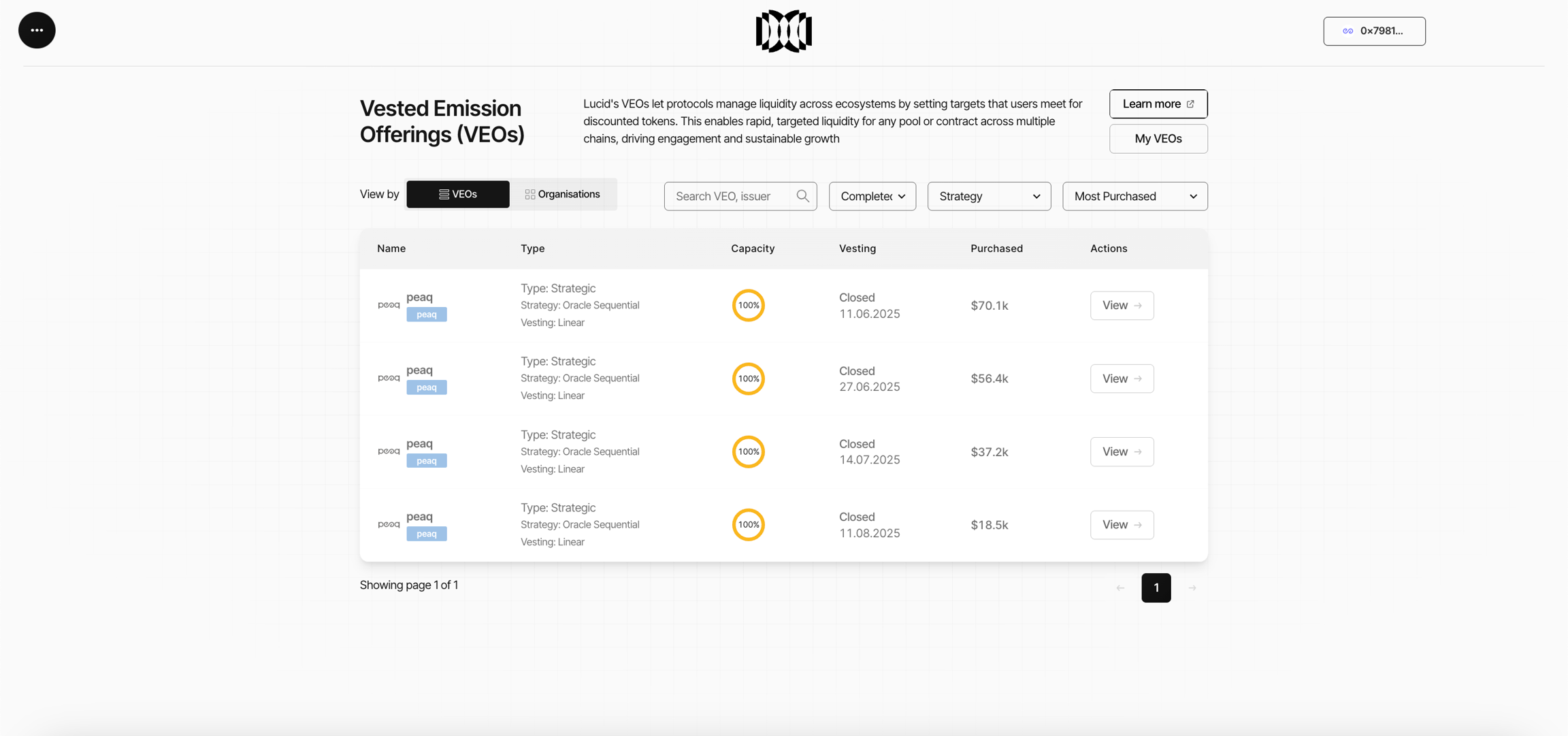
- Open the OTC section.
- Locate the target deal.
- Open the deal detail page.
- Connect an authorised governance wallet.
- Click Close Market.
- Approve and execute the governance transaction.
If multisignature governance is enabled:
- the proposal enters the pending approval flow
- required signer approvals must be collected
- execution becomes available after threshold approval
Permission Visibility
Governance actions are only visible to authorised governance participants.
If a connected wallet does not have governance permissions:
- management controls remain hidden
- approval interfaces do not appear
- execution actions are unavailable
This ensures governance operations remain restricted to authorised participants only.
Governance Lifecycle
OTC governance infrastructure coordinates the operational lifecycle of a deal, including:
- creation
- approval
- deployment
- monitoring
- execution
- closure
All governance actions are coordinated directly through Lucid’s integrated OTC infrastructure. Commercial terms such as price, vesting, capacity, and participation rules are fixed after deployment; administrative roles do not provide a way to rewrite them.