

Organisation Dashboard
The Organisation Dashboard provides a centralised operational interface for managing an organisation’s infrastructure, modules, governance systems, and deployed contracts.
Each dashboard acts as the primary management environment for:
- infrastructure coordination
- governance operations
- treasury management
- interoperability administration
- module configuration
- protocol activity monitoring
The available functionality depends on the modules deployed within the organisation.
Organisation Overview
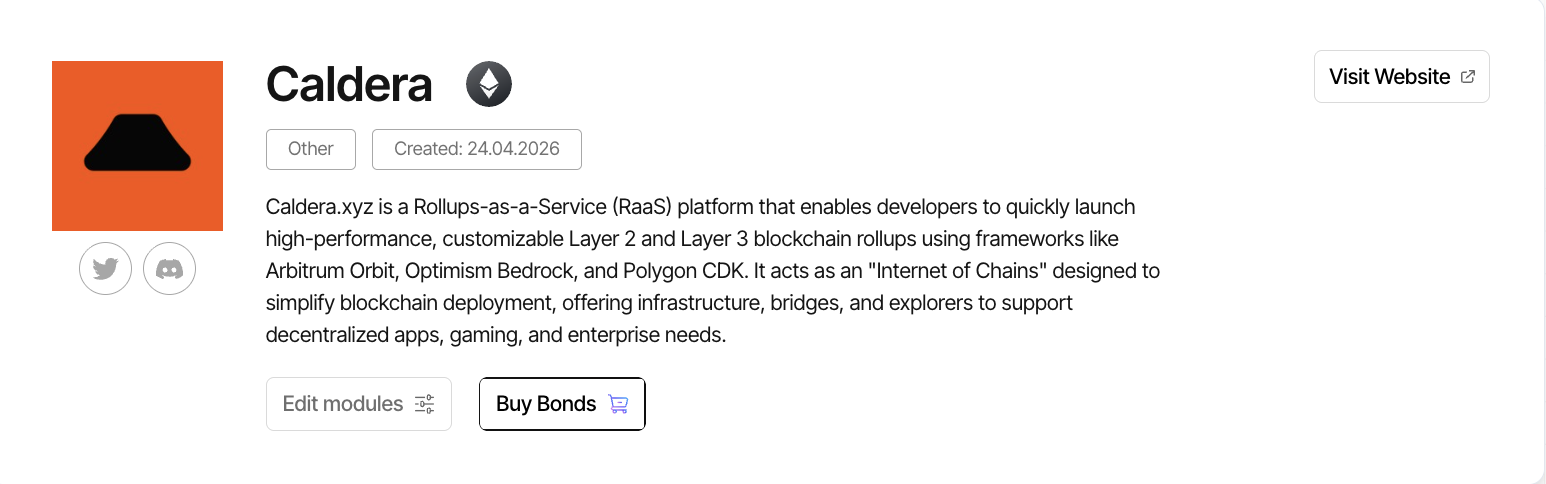
The top section of the dashboard displays the organisation’s core profile information.
This includes:
- organisation name
- organisation category
- creation date
- ecosystem description
- supported chains
- external links
Supported chain icons indicate where the organisation has deployed infrastructure modules.
Quick Actions
The dashboard includes quick-access operational actions for commonly used workflows.
Available actions can include:
- Edit Modules
- Create OTC Deal
- Buy OTC Allocations
- Visit Website
- Open Governance Interfaces
- Access Operational Panels
Available actions vary depending on:
- deployed modules
- governance permissions
- organisation configuration
Modules Section
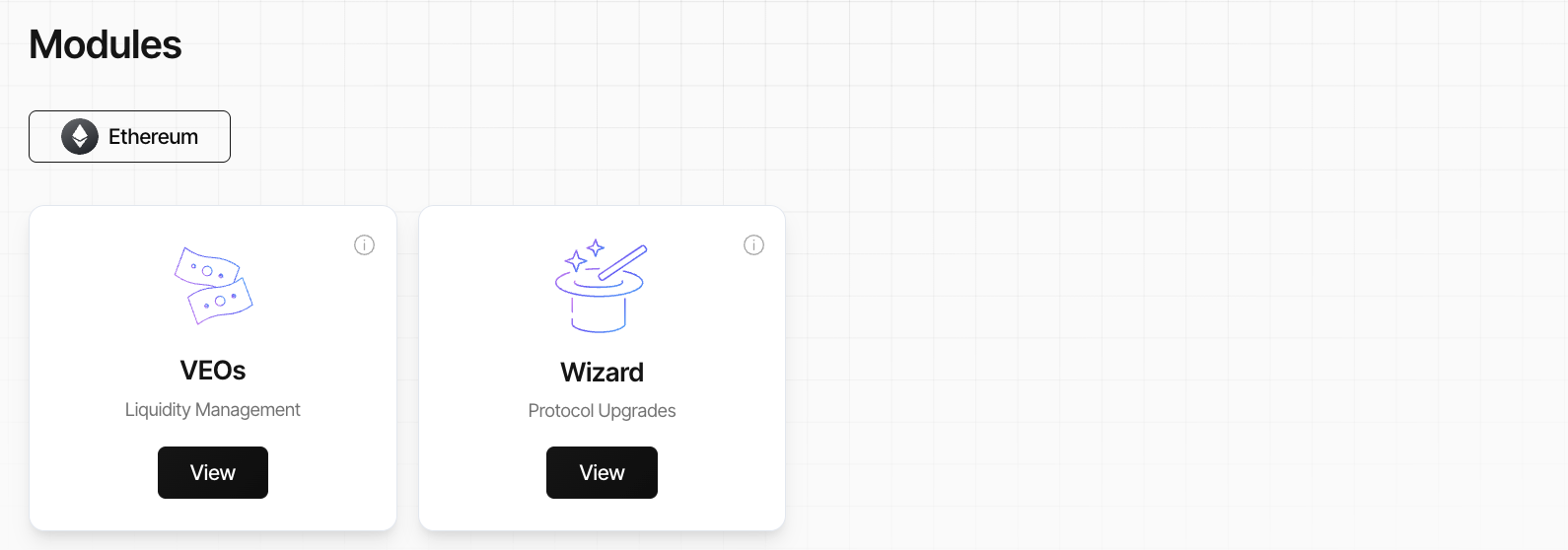
The Modules section displays all infrastructure modules currently deployed within the organisation.
Each module card includes:
- module name
- infrastructure description
- operational category
- management access
- module status
Modules are grouped by infrastructure function rather than individual products.
Module Categories
Organisation modules generally fall into the following infrastructure categories:
| Category | Purpose |
|---|---|
| Interoperability | Cross-chain messaging and transfer coordination |
| Governance | Proposal management, voting, and veto systems |
| Liquidity Management | Treasury, OTC deal, and liquidity coordination infrastructure |
| Collaboration | Working group and operational coordination |
| Protocol Management | Upgrade administration and protocol operations |
Detailed module configuration flows are covered in the Creating an Organisation section.
Module Management Panels
Each module includes a dedicated management interface accessible through the View button.
Management panels can support:
- operational approvals
- analytics
- proposal management
- governance coordination
- treasury operations
- infrastructure administration
- cross-chain execution management
Depending on the module configuration:
- some actions execute directly inside Lucid
- some interfaces integrate external infrastructure providers
Dashboard Analytics
The dashboard can provide analytics and operational metrics depending on enabled modules.
Available analytics may include:
- governance activity
- OTC deal participation
- treasury coordination
- interoperability activity
- liquidity metrics
- protocol deployment visibility
Displayed metrics depend on the infrastructure deployed within the organisation.
Supported Chains
The dashboard displays all chains where the organisation has active infrastructure deployments.
Supported chains determine where:
- governance infrastructure operates
- token systems are deployed
- bridge infrastructure is configured
- treasury systems exist
- interoperability modules function
Chain support depends on:
- module configuration
- infrastructure compatibility
- deployment selection during setup
Contract Addresses
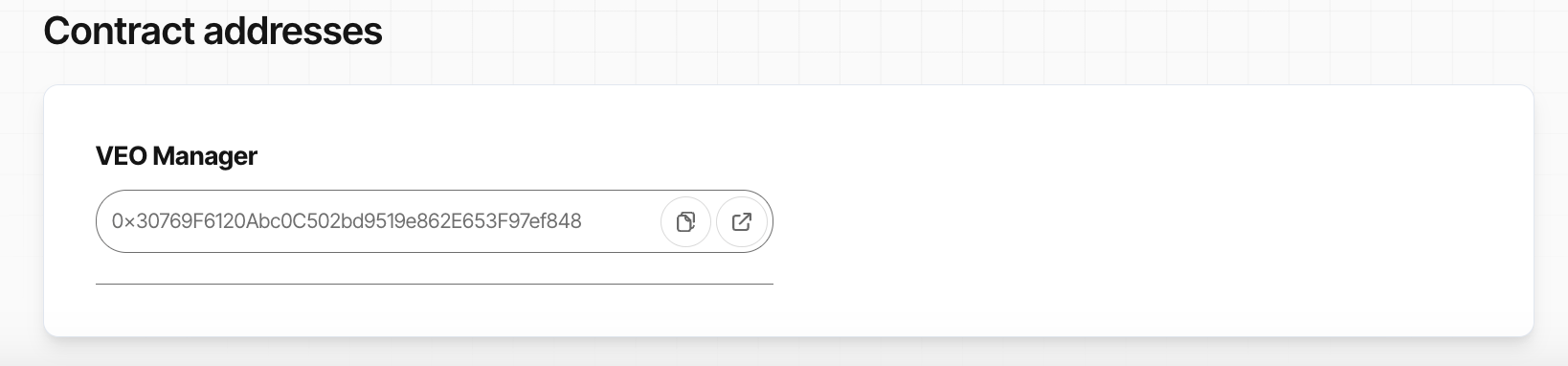
The Contract Addresses section provides visibility into deployed smart contract infrastructure across supported chains.
This section includes:
- module contract addresses
- chain-specific deployments
- explorer integrations
- infrastructure references
Clicking a contract address opens the corresponding block explorer for:
- transaction visibility
- contract verification
- operational monitoring
Operational Coordination
The Organisation Dashboard acts as the central operational environment for managing deployed ecosystem infrastructure.
Through the dashboard, organisations can:
- monitor infrastructure activity
- manage governance systems
- coordinate upgrades
- administer interoperability modules
- manage treasury infrastructure
- access deployed operational tooling
Additional deployment, governance, and interoperability flows are covered in the following sections.